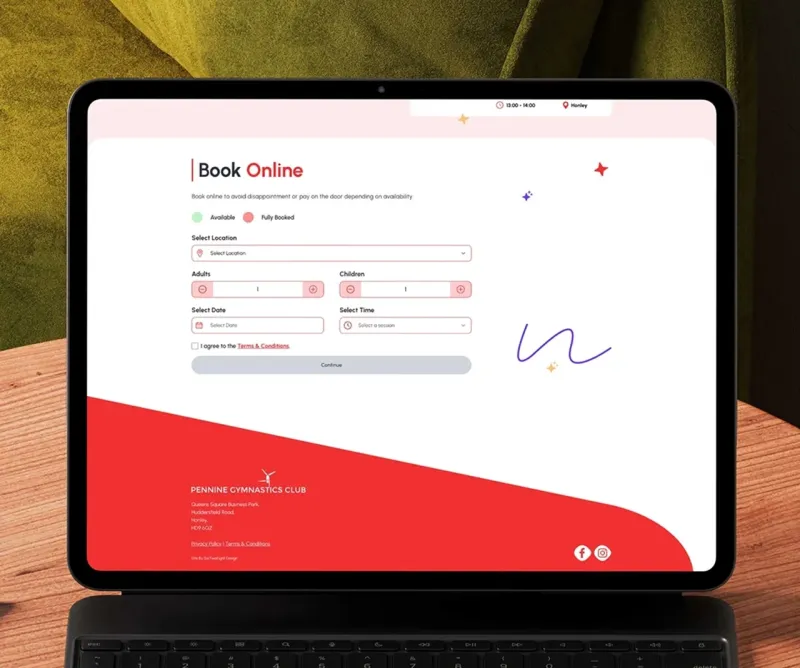

Designjoy made the design subscription famous. One flat monthly fee, a queue of requests, work back in a couple of days, pause when you're quiet. It's a genuinely good model, and a lot of studios, ours included, have borrowed from it.
But a design subscription hands you a design. If you run a software product, a design is the halfway point. Somebody still has to build the screen, wire it to the database, test it and ship it. That's usually where the plan falls apart.
This post is for founders who have looked at Designjoy, liked the model, and then realised the bottleneck isn't design.
What Designjoy and the others actually sell
Prices change, so check each site before you decide. At the time of writing:
| Service | What you get | Roughly what it costs |
|---|---|---|
| Designjoy | One senior designer, run by its founder. Brand, web and product design. | Around $5,000 a month, one plan |
| Superside | A large design team for marketing and in-house creative teams. | Quoted through sales. Reported entry points start around $10,000 a month, usually on annual terms |
| ManyPixels and similar | Graphic design at volume: social, ads, decks, illustrations. | Lower monthly tiers |
| 628 on subscription | A senior product designer and a senior Laravel developer on the same product. Design and build. | £4,500 a month, or £3,500 a month for your first six months on a founding place |
The first three are design services. They're good at it, and if design really is all you need, one of them may suit you better than we would. We say why further down.
The gap nobody prices in
Here's how it tends to go with a design-only subscription for a software product.
The designs arrive quickly and they look great. Then they sit in Figma waiting for a developer. If you have an in-house developer, they're already busy, and now they have a backlog of screens they didn't help shape. If you hire a freelancer, they meet the design for the first time when it's finished, and the questions start: what happens on an empty state, where does this data come from, this interaction needs a library we don't use.
None of that is anyone's fault. The designer and the developer are working for different people, at different times, from different assumptions. The handover is where the time goes, and it never shows up on either invoice.
So when you compare a $5,000 design subscription with a design and development one, the honest comparison is the design subscription plus whatever it costs to get those designs built, plus the weeks they spend waiting.
What a design and development subscription changes
The model stays the same: flat monthly fee, a queue, one request at a time, pause or cancel any month. What changes is what comes out at the end.
A request ends in shipped software, not a file. "Redesign onboarding" doesn't stop at a Figma link. It ends with the new onboarding live on staging, and then in production.
The designer and developer work on the same request together. The developer is part of the design conversation, so nothing gets designed that can't be built well, and the build doesn't quietly drift from the design.
It covers the work design subscriptions turn down. Database changes, Stripe billing, integrations, admin panels, performance, hosting. On our plan these go in the same queue as the screens.
One team, the same people in month nine as in month one. They know your codebase, so the second version of a feature doesn't cost what the first did.
What it costs, side by side
Say you're a funded SaaS founder with a product that needs both design and engineering every week.
| Design subscription + freelance developer | Design and development subscription | |
|---|---|---|
| Design | ~$5,000 a month (about £3,900) | Included |
| Development | A senior UK freelancer for two to three days a week is often £1,800 to £3,000 a week, so £7,000 to £12,000 a month (estimate) | Included |
| Coordinating the two | You | Us |
| Monthly total | Roughly £11,000 to £16,000 | £4,500 (£3,500 on a founding place) |
The freelance figures are an estimate, and rates vary a lot by stack and region. The point doesn't depend on the exact number. Once you need code as well as design, a design-only subscription is the cheaper half of a more expensive arrangement.
To be fair, the comparison isn't exactly like for like. Our plan is one active request at a time, roughly a lane that ships continuously rather than three full-time people. If you need far more throughput than that, our Pro plan runs two requests at once. And if you need a whole department, you should hire, and we've written up what that costs.
When Designjoy is the better answer
We'd rather say this plainly than have you find out three months in.
- You only need design. Marketing pages on Webflow, a brand refresh, pitch decks, ad creative. A design subscription is built for that and we're not trying to be one.
- You already have a strong engineering team with spare capacity, and design is genuinely the bottleneck.
- You need large volumes of marketing assets. Superside and the volume services are set up for that in a way a product team isn't.
When you need design and development together
- You have a live product with users, and every week there's a mix of screens, features, fixes and integrations.
- You've paid for designs that never got built, or got built badly.
- You built a first version in Lovable, Bolt or Cursor, and it now needs a real engineer before you put customers on it. We wrote about that separately.
- You don't want to manage two suppliers and act as the go-between.
How to try it without committing
If you want to see how we work before subscribing, start with the two-week kickoff sprint at £1,950: one defined piece of work, designed and shipped. Subscribe within 30 days and the whole £1,950 comes off your first month.
Or go straight to the plan. Cancel inside your first week and we refund 75%.
If you're still weighing it up, see how the product team works or book thirty minutes. We'll tell you honestly whether you need a design subscription, a development one, or neither.